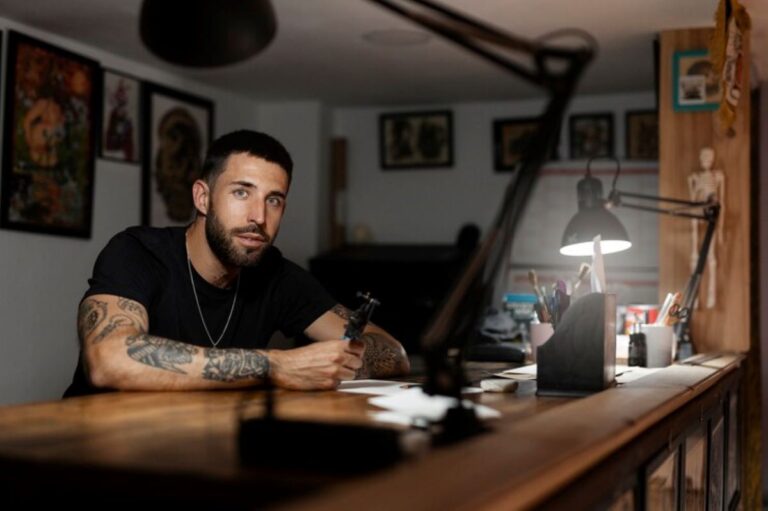
What ties these trends together is intention. People are choosing designs that suit their lifestyle, heal well, and still look sharp years later.
What’s driving tattoo style choices in the Eastern Suburbs right now?
Clients seeking an Eastern Suburbs tattoo are prioritising designs that feel personal yet easy to live with. They want tattoos that suit work settings, gym and beach routines, and a generally polished aesthetic.
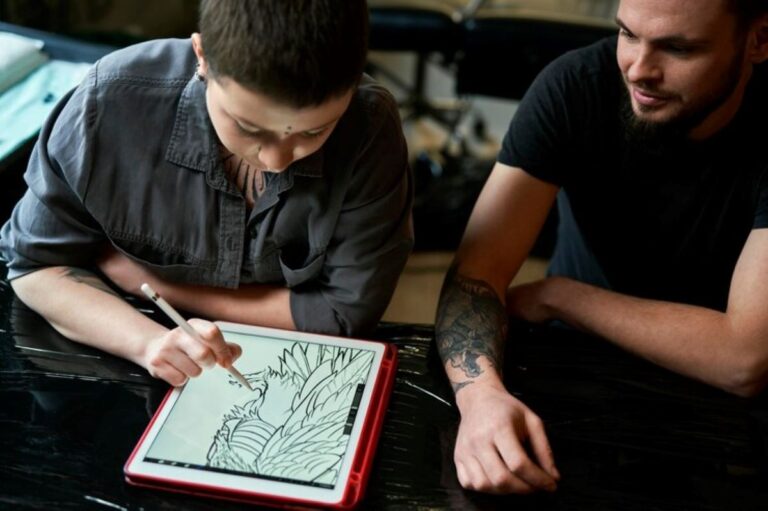
Artists in the Eastern Suburbs are guiding choices more than ever, educating clients on placement, longevity, and how certain styles age on different skin types and in high-sun environments.
Why are minimalist tattoos still so popular?
Minimalism stays popular because it is discreet, versatile, and fast to execute. Many clients like the idea of starting small without committing to a large piece immediately.
Fine-line symbols, micro florals, and tiny script remain common requests. Artists often recommend slightly thicker lines than clients expect, because ultra-fine work can blur sooner, especially in high-friction areas.
Which placements are clients choosing for subtle pieces?
They often choose placements that can be shown or hidden easily. Inner forearms, ribs, upper arms, and ankles remain common, depending on pain tolerance and visibility needs.
Collarbones and behind-the-ear placements are still requested, but artists may caution that these areas can fade faster. If subtlety is the goal, many clients opt for upper arm or inner bicep placements that heal predictably.
Are fine-line florals and botanical tattoos evolving?
Yes, they are becoming more structured and more custom. Instead of generic stems, clients are asking for specific flowers with meaning, or botanicals tied to places and memories.
Artists are also blending fine-line florals with light shading for depth. This helps designs hold up better over time, especially when petals and leaves need separation as the ink settles.
What’s happening with script tattoos and lettering trends?
Script is shifting toward cleaner, more legible lettering. Many clients still want meaningful phrases, but they are choosing fonts that read well from a distance and age better.
Micro lettering remains in demand, but artists often recommend sizing up. Slightly larger text with solid spacing tends to stay readable longer, especially on hands, wrists, and along curved areas like ribs.
Why are full-sleeve designs growing in demand?
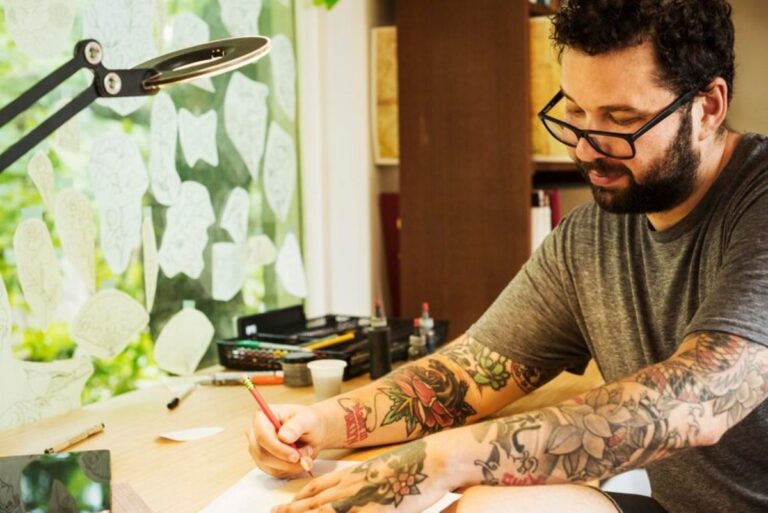
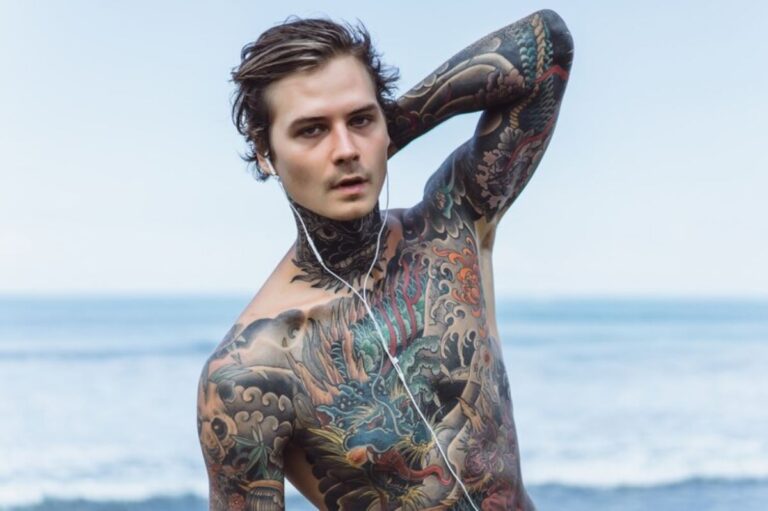
Sleeves are rising because clients want cohesive, high-impact work rather than disconnected tattoos. They are planning long-term, saving reference ideas, and booking multi-session projects with a clear direction.
They also see sleeves as wearable art. A well-designed sleeve looks intentional in casual clothes and still holds visual interest up close, especially when negative space and flow are designed properly.
What sleeve styles are people choosing most often?
They are choosing styles that balance boldness with detail. Japanese-inspired themes, black-and-grey realism, illustrative sleeves, and neo-traditional work are common directions.
Many sleeves now mix elements, such as realism portraits with ornamental framing, or florals combined with geometric patterning. Artists usually aim to unify everything with consistent shading, line weight, and transitions.
How are black-and-grey and realism trends shifting?
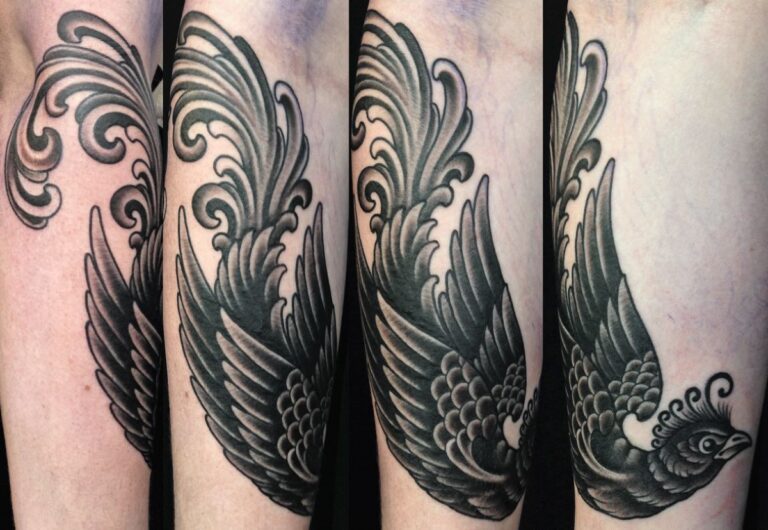
Black-and-grey remains strong, but clients are leaning toward softer contrast and smoother blends. They want realism that looks refined, not overly harsh.
There is also more focus on composition than single hero images. Instead of one large face with filler, sleeves are being built as scenes, with foreground and background that guide the eye from shoulder to wrist.
Are geometric, ornamental, and linework designs still trending?
Yes, especially for clients who want structure and symmetry. Ornamental forearm cuffs, mandala-based pieces, and dotwork shading are common, often paired with florals or fine-line elements.
Artists are paying more attention to flow with body contours. The best geometric work follows anatomy, so it moves naturally with the arm, rather than looking like a flat sticker placed on skin. Read more about Tattoos.
What role do colour tattoos play in the current scene?
Colour is less dominant than black-and-grey, but it is far from gone. Clients who choose colour tend to want it intentional, either as soft accent tones or bold traditional palettes.
Muted tones, earthy reds, and limited palettes are common. Artists may recommend strategic placement and strong outlines, because sun exposure can dull bright pigments faster without consistent aftercare.
How are clients blending small tattoos into larger future plans?
They are thinking in “collections” rather than one-offs. A small tattoo might be designed as the first anchor point for a larger sleeve or patchwork layout later.
Artists often map out future space early. They may advise leaving skin breaks for breathing room, or placing early pieces in positions that will connect easily, so the final composition looks planned.

What should clients consider before choosing minimalist or full-sleeve work?
They should consider time, budget, and how the tattoo will age. Minimalist work can be affordable and quick, but it still needs the right sizing and placement to hold up well.
Sleeves require patience and planning. They need multiple sessions, consistent aftercare, and trust in the artist’s ability to build a cohesive design that fits the arm’s shape.
How do they choose an artist who matches their style?
They should look for healed photos, not just fresh work. Healed examples show line stability, fading patterns, and how shading settles over time.
They should also check whether the artist’s portfolio matches the exact style they want. A strong realism artist may not be the best choice for delicate fine-line florals, and vice versa. A consultation should clarify design direction, session planning, and expectations.
Related : Best Sydney Tattoo Artists: Portfolio Tips Before You Commit
FAQs (Frequently Asked Questions)
What tattoo styles are currently popular in the Eastern Suburbs?
In the Eastern Suburbs, tattoo styles are trending in two main directions: minimalist linework for a subtle, personal look, and bold, story-driven full sleeves that serve as wearable art. Both styles prioritize intention, matching clients’ lifestyles and ensuring designs heal well and maintain sharpness over time.
Why do minimalist tattoos remain a favored choice among clients?
Minimalist tattoos continue to be popular due to their discreetness, versatility, and quick execution. Many clients appreciate starting with small pieces such as fine-line symbols, micro florals, or tiny scripts. Artists often recommend slightly thicker lines to ensure longevity since ultra-fine lines can blur sooner, especially in high-friction areas.
Which body placements are preferred for subtle or minimalist tattoos?
Clients often select placements that offer flexibility in visibility like inner forearms, ribs, upper arms, and ankles. Areas such as collarbones and behind-the-ear are also requested but may fade faster. For subtlety combined with predictable healing, upper arm or inner bicep placements are commonly advised by artists.
How are full-sleeve tattoo designs evolving in the Eastern Suburbs?
Full-sleeve designs are gaining demand as clients seek cohesive and high-impact artwork rather than disconnected tattoos. Popular sleeve styles include Japanese-inspired themes, black-and-grey realism, illustrative work, and neo-traditional designs. Many sleeves blend elements like realism portraits with ornamental framing or florals combined with geometric patterns to create unified compositions with consistent shading and flow.
What considerations should clients keep in mind before choosing between minimalist tattoos and full sleeves?
Clients should evaluate factors such as time commitment, budget, and how the tattoo will age. Minimalist tattoos can be more affordable and quicker but require proper sizing and placement to maintain quality over time. Full sleeves demand patience across multiple sessions, consistent aftercare, and trust in the artist’s ability to design a cohesive piece that complements the arm’s shape.
How can clients select an artist who aligns with their desired tattoo style?
Clients should review healed photos of an artist’s work to assess line stability, fading patterns, and shading longevity rather than just fresh tattoos. It’s important to ensure the artist’s portfolio matches the specific style sought—for example, a realism specialist may not be ideal for delicate fine-line florals. A thorough consultation helps clarify design direction, session planning, and set realistic expectations.